Getting started with Ledger Wallet (formerly Ledger Live)
Ledger Wallet™ (formerly known as Ledger Live™) is the official companion application for Ledger™ hardware wallets. It is designed to help you securely manage your cryptocurrencies, configure your Ledger device, and interact with a wide range of blockchain services—all while keeping your private keys offline and protected.
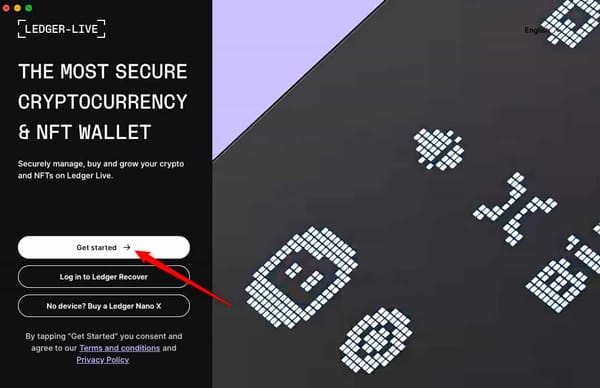
The first time you use the Ledger Wallet application, it will guide you step by step through setting up your Ledger device and configuring the app. This initial setup is an essential part of ensuring the security of your digital assets.
What Is Ledger Wallet?
Ledger Wallet is a local application available on desktop computers (Windows, macOS, and Linux) and mobile devices (iOS and Android). Unlike many crypto apps, Ledger Wallet does not rely on cloud storage or user accounts. Your crypto accounts, transaction history, and settings are stored locally on your computer or phone, not on Ledger’s servers.
Because of this design, if you install Ledger Wallet on a second computer or phone, you will need to add your crypto accounts again. Your assets are not lost—your private keys remain securely stored on your Ledger device—but the app itself does not automatically sync across devices.
First-Time Setup Experience
When you launch Ledger Wallet for the first time, the app will guide you through a simple onboarding process. You will be asked whether you want to:
- Set up a new Ledger device
- Restore an existing Ledger device using a recovery phrase
Once your Ledger device is connected (via USB on desktop or Bluetooth/USB on mobile, depending on the model), Ledger Wallet will verify that the device is genuine and up to date. This verification step helps protect you from counterfeit devices and ensures that your hardware wallet is running trusted software.
After this, the app will prompt you to set up basic preferences, such as enabling password protection for the app and choosing whether to allow anonymous analytics.
Managing Crypto Accounts
Ledger Wallet allows you to manage multiple cryptocurrency accounts from one interface. To do this, you install individual blockchain apps (such as Bitcoin or Ethereum) directly onto your Ledger device using Ledger Wallet.
Once a blockchain app is installed, you can add accounts in Ledger Wallet. Each account represents a public address derived securely from your Ledger device. You can then:
- View balances
- Send and receive crypto
- Track transaction history
If you install Ledger Wallet on another phone or computer, you will need to repeat the process of adding accounts. This does not affect your funds, as the Ledger device always controls access to your private keys.
Local Storage and Security
One of the key features of Ledger Wallet is that all data is stored locally on your device. There is no need to create an email-based login or password-based account with Ledger.
Access to your crypto remains protected by:
- Your Ledger device
- The device PIN you created
- Physical confirmation on the device for transactions
This design significantly reduces the risk of online attacks, phishing, or unauthorized access.
Ledger Wallet as a Gateway to Third-Party Services
Ledger Wallet is more than just a portfolio tracker. It also acts as a gateway to third-party services, allowing you to interact with the broader crypto ecosystem while maintaining hardware-level security.
Through Ledger Wallet, you can access services such as:
- Buying and selling crypto through partners
- Swapping tokens
- Staking supported cryptocurrencies
- Connecting to decentralized applications (dApps)
These services are provided by third-party partners, but transactions are always approved on your Ledger device. This ensures that you stay in control of your assets at all times.
To learn more about how Ledger Wallet connects to third-party services and what is available, you can explore the in-app “Discover” or “Services” sections.
Using Ledger Wallet on Multiple Devices
Ledger Wallet can be installed on multiple computers or phones, but each installation is independent. Because the app does not sync data across devices, you must:
- Add your accounts again on each device
- Connect your Ledger device to access balances
This approach enhances privacy and security, as no centralized account or cloud backup is used.
Ongoing Use and Updates
Ledger Wallet is regularly updated to add support for new cryptocurrencies, improve performance, and introduce new features. Keeping both your Ledger Wallet app and your Ledger device firmware up to date is recommended to ensure optimal security and compatibility.
The app also includes helpful notifications, educational content, and troubleshooting tools to support both new and experienced users.
Final Thoughts
Getting started with Ledger Wallet is a straightforward process that prioritizes security, control, and ease of use. By guiding you through device setup, account management, and access to third-party services, Ledger Wallet serves as a powerful companion for managing your crypto assets.
Whether you are new to crypto or an experienced user, Ledger Wallet provides a secure foundation for interacting with the digital asset ecosystem—without compromising control over your private keys.